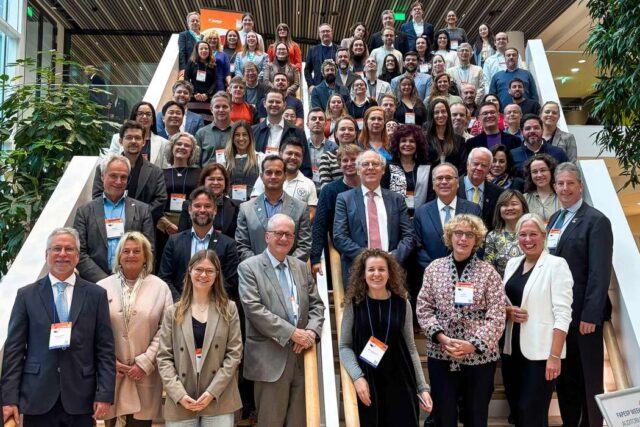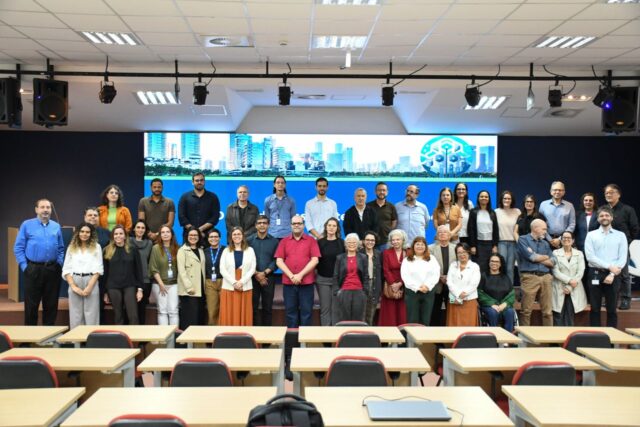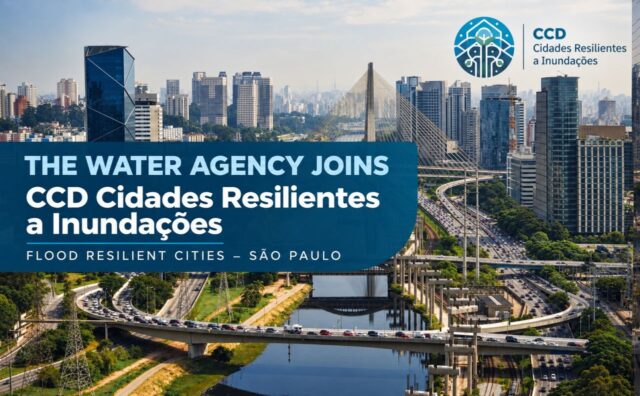
The Water Agency recently mediated a workshop hosted by IPT – Instituto de Pesquisas Tecnológicas as part of the SCD Flood Resilient Cities initiative, bringing together researchers, government agencies, universities, infrastructure operators, and industry partners committed to advancing urban flood resilience in São Paulo and beyond.
The event focused on a simple but thought-provoking question: Why does the same street flood every time it rains heavily? In many cases, the answer lies beneath the urban landscape itself. According to Filipe Antonio Marques Falcetta, a researcher from IPT, understanding the historical occupation of cities, including the burial, canalisation, and modification of rivers and waterways, is essential for understanding present-day flood risks and planning more resilient urban environments. During the open lecture, participants explored how urban development patterns have shaped drainage systems and altered natural water flows over time. Discussions highlighted the need to move beyond traditional engineering solutions and adopt more integrated approaches that combine urban planning, social dimensions, governance, and climate adaptation. As Filipe noted, building resilient cities requires much more than infrastructure works alone.
The workshop also included a collaborative session for members of the CCD Flood Resilient Cities network, facilitated by Ana Clara Cassanti from The Water Agency. The discussions took place against the backdrop of increasingly frequent and intense rainfall events affecting Brazilian cities. During the session, participants reflected on the growing urgency of climate adaptation and the importance of connecting scientific knowledge with real-world decision-making.
Beyond the individual discussions, the workshop reinforced the broader ambition of the SCD Flood Resilient Cities initiative: connecting research, public institutions, private-sector expertise, and communities to address the growing challenge of urban flooding.