October has always held a special place in Pekalongan’s batik calendar. This year, one day brought together three important milestones for Green Batik Pekalongan, highlighting how the initiative continues to connect water, culture, innovation, and community engagement.
The celebrations brought together partners from Indonesia and the Netherlands, including representatives from the Dutch Embassy in Indonesia, local government, academia, and the wider Green Batik consortium. Together, the events reflected a shared commitment to supporting a more sustainable future for Pekalongan’s batik sector while preserving the cultural heritage that makes the city unique.
1. A New Home for Collaboration and Innovation
The day began with the official launch of the Green Batik Center at Universitas Pekalongan (UNIKAL), inaugurated by H.E. Marc Gerritsen, Ambassador of the Kingdom of the Netherlands to Indonesia, and Rector Dr. Andi Kushermanto.
The new centre creates a local hub for collaboration, learning, and practical action around sustainable batik production. Building on the lessons and innovations developed through the Green Batik Pekalongan pilot, it provides a space where students, researchers, batik artisans, and partners can continue working together to explore solutions for water management, wastewater treatment, and sustainability within the batik sector. The establishment of the centre marks an important step in strengthening local ownership and ensuring that knowledge and innovation generated through the project can continue to grow beyond the pilot phase.
2. Celebrating Batik Heritage and Sustainable Innovation
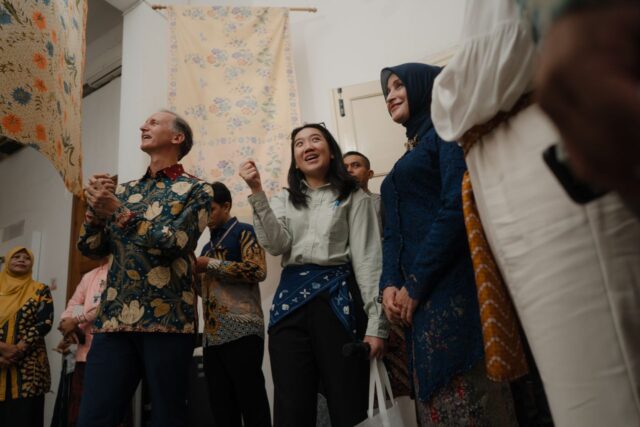
The second milestone was the opening of the Green Batik Exhibition at the Pekalongan Batik Museum. The exhibition showcased how tradition and innovation can work hand in hand, highlighting the achievements of the project’s Batik Champions and their efforts to carry batik knowledge forward while responding to contemporary environmental challenges.
The exhibition built on a central idea that has shaped Green Batik Pekalongan from the beginning: that cultural heritage and environmental sustainability are deeply connected. Behind every batik cloth lies a story of craftsmanship, water use, livelihoods, and community identity. By making these connections visible, the exhibition encouraged visitors to reflect on how traditional industries can continue to thrive while reducing their environmental footprint.
3. Batik in Everyday Life
The day concluded at Kauman Batik Art Fest, where H.E. Marc Gerritsen joined the Mayor of Pekalongan to officially open the festival under the theme “Batik dalam Kehidupan” (Batik in Everyday Life). The festival highlighted the enduring importance of batik within the social, cultural, and economic life of Pekalongan. Bringing together artisans, residents, and visitors, the event celebrated batik not only as a cultural heritage asset but also as a living tradition that continues to evolve across generations.
Together, these three milestones represent more than individual events. They reflect the broader ambition of Green Batik Pekalongan: strengthening the connection between water and culture while creating opportunities for innovation, engagement, and collaboration.
For The Water Agency, the launch of the Green Batik Center represents an important step in ensuring that the knowledge, partnerships, and innovations developed through the project can continue to create impact locally. Together with consortium partners and stakeholders in Pekalongan, we are working to strengthen the connection between water resilience, sustainable production, and the city’s rich batik heritage.