The Water Agency recently joined project partners in Tra Vinh province to review the progress of several pilot solutions being developed through the Mekong Salt Lab initiative. The visit brought together researchers, technical experts, and local partners to inspect a series of practical models designed to help farming communities respond to increasing salinity challenges in the Mekong Delta. The solutions focus on improving water availability and supporting agricultural production in areas affected by saltwater intrusion.
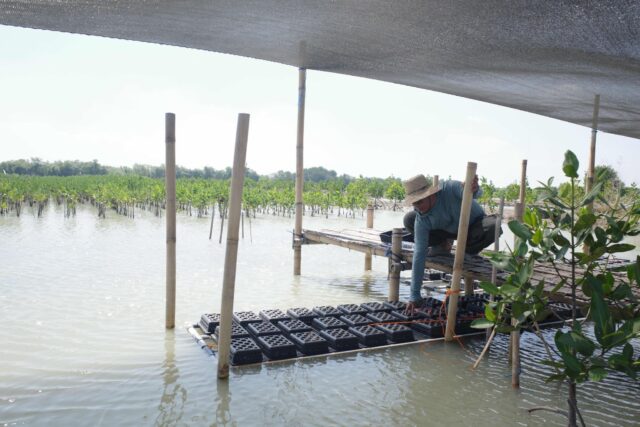
During site visits, the team reviewed the implementation of several pilot models, including hydroponic farming systems, water collection and retention measures, and water treatment solutions. Seeing the models in operation provided an opportunity to assess their progress, discuss potential improvements, and better understand how they perform under local conditions.
A key part of the visit involved engaging directly with participating farmers. These conversations provided valuable insights into the realities of farming in areas increasingly affected by salinity, including challenges related to freshwater availability, agricultural productivity, and changing environmental conditions.
The discussions reinforced the importance of developing solutions that are both technically effective and practical for local communities. While innovation plays an important role, long-term adaptation depends on approaches that respond to the specific needs, priorities, and experiences of the people using them.
Several months after the initial site inspections, the pilot models continue to be implemented and tested in Tra Vinh. This ongoing process allows project partners to learn from real-world application, gather feedback, and refine approaches based on practical experience.
For The Water Agency, the visit highlighted the value of combining technical innovation with local knowledge. By working closely with farmers, researchers, and implementation partners, the project continues to generate insights into how communities can strengthen resilience to salinity while maintaining sustainable agricultural livelihoods.